










1. Solution 1: On-wall Cable Trunking – A visible but quick initial measure for TV cables
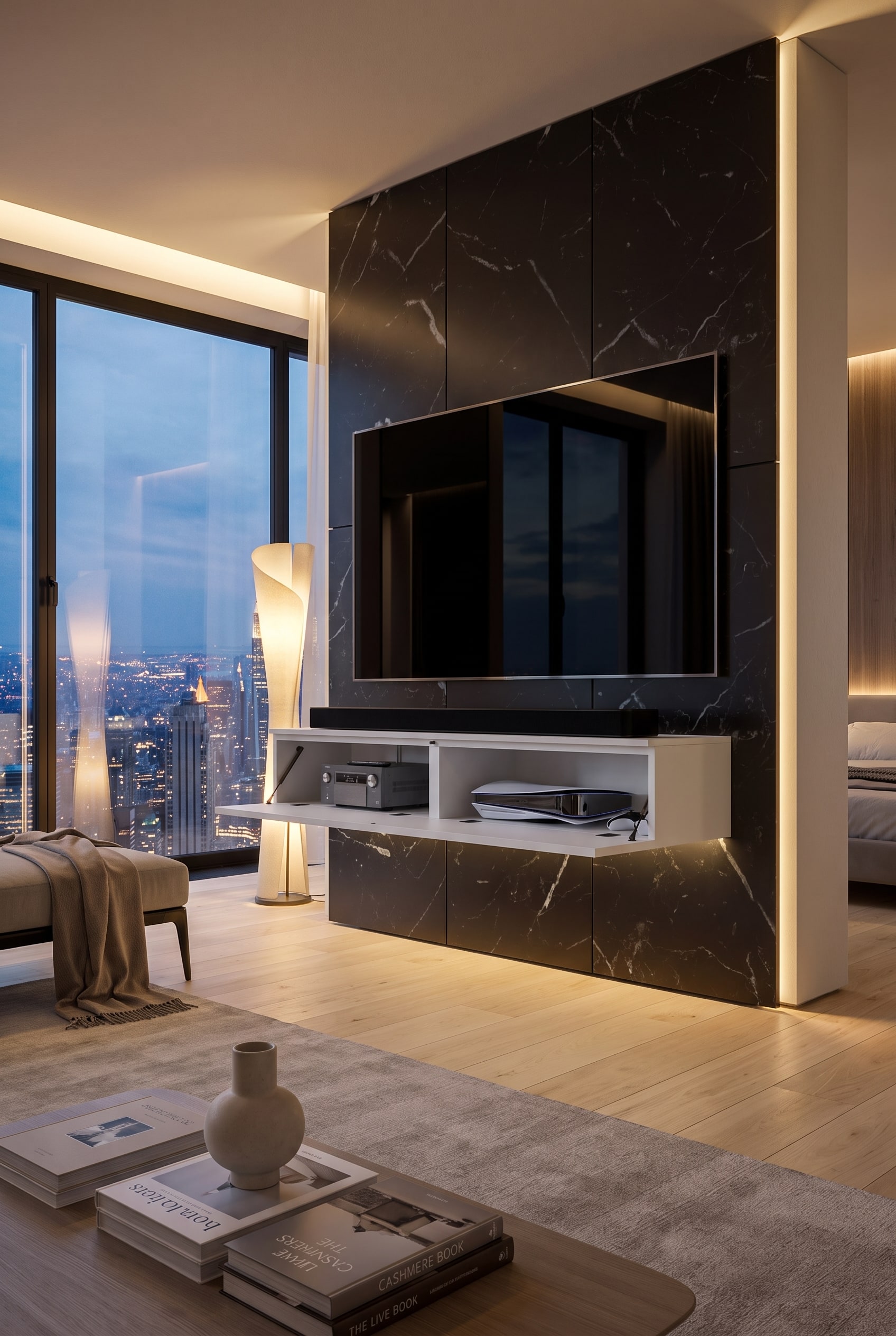
 Product shown true to original. Room styling created by digital staging.
The classic plastic TV cable trunking is the instinctive grab from the DIY store shelf. A 30x30 millimetre profile typically accommodates a mains power cable, an HDMI cable, and an optical audio cable. This method conceals the clutter, but adds a visible foreign object to the wall's architecture.
We strongly advise against using the factory-applied adhesive strips. On woodchip or non-woven wallpaper, the trunking usually detaches after a few weeks due to the weight of the copper cables. Drilling and plugging at 40-centimetre intervals guarantees a permanent hold, but damages the wall's surface.
Visually, this option remains a compromise. Even if the trunking is painted in the exact colour of the wall, the surface-mounted profile inevitably casts shadows. For rental properties or frequently changing setups, it serves its purpose, but in a well-thought-out living concept, it appears out of place.