













- Round Marble Dining Table: The Secret to Dynamic Space
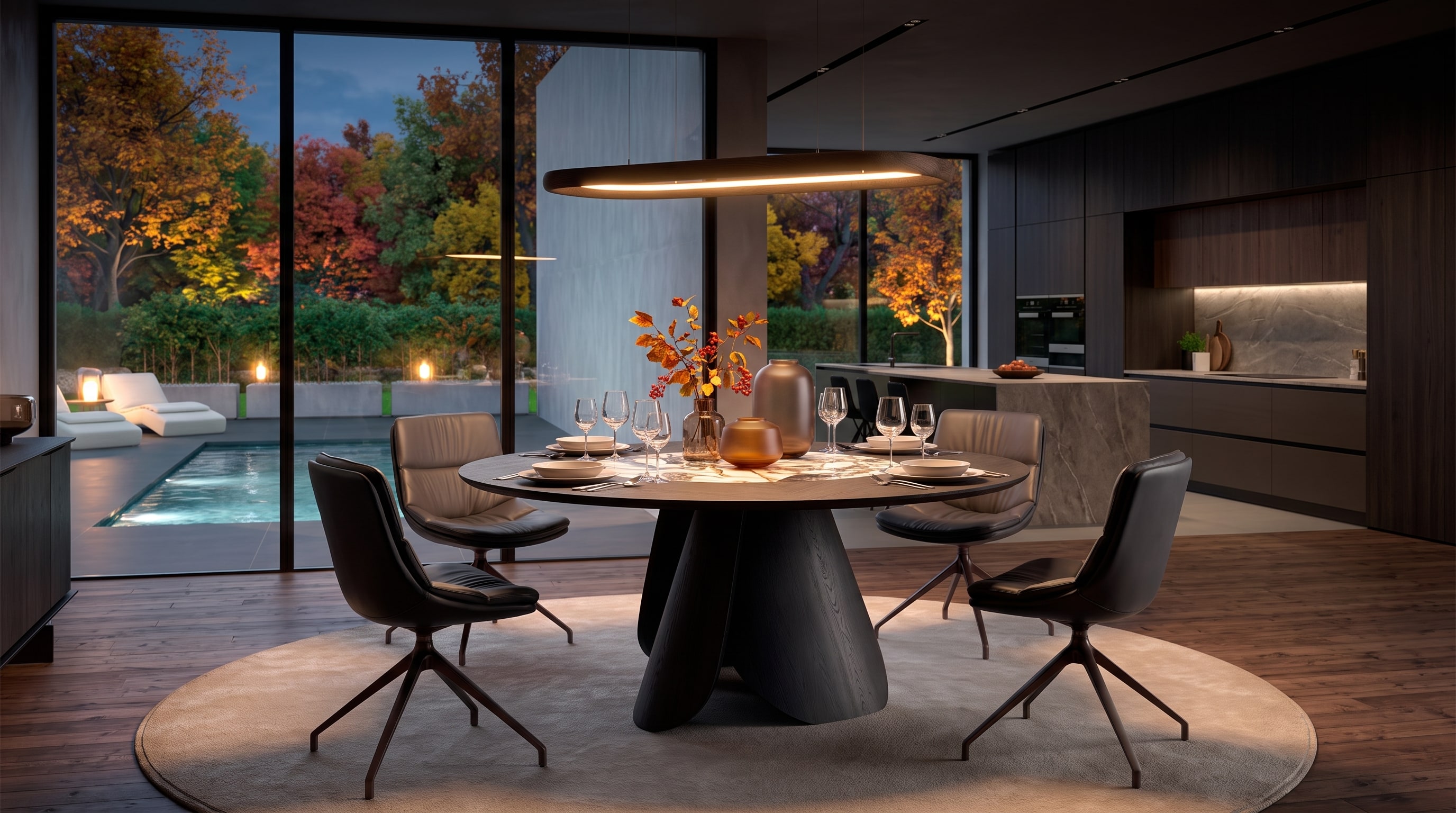 Round Marble Dining Table: The Secret to Dynamic SpaceDiscover how the combination of cool natural stone and warm wood redefines the center of your home and how to perfectly stage a round table.
 - Decorating Empty Corners & Open Spaces: The Architectural Sideboard Solution
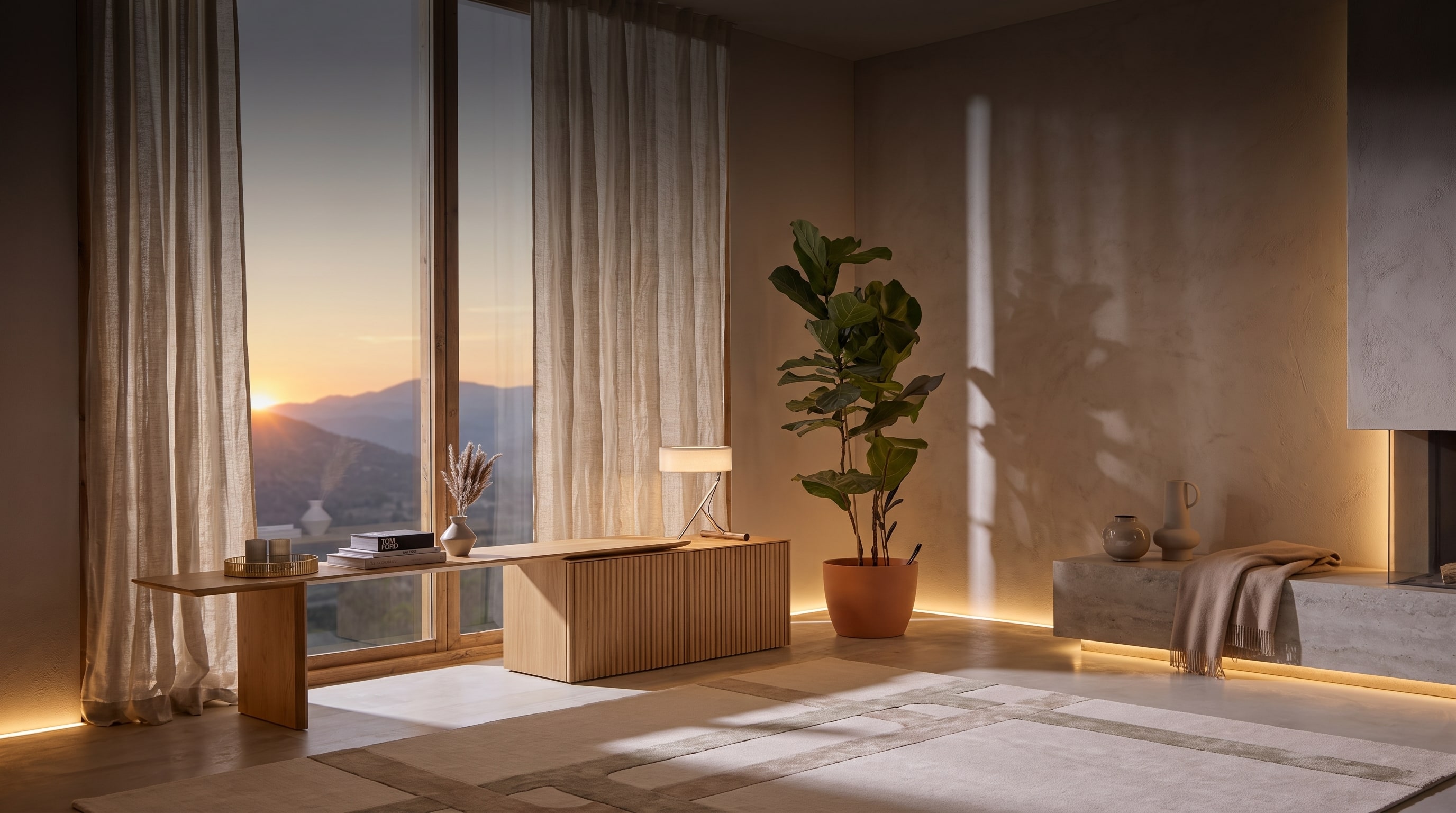 Decorating Empty Corners & Open Spaces: The Architectural Sideboard SolutionFrom smart room dividers to minimalist media walls: Discover three ways the Punt Velasca Sideboard transforms open living concepts.
 - Livitalia Rondo: The Curved Design Trend Redefining Modern Living
 Livitalia Rondo: The Curved Design Trend Redefining Modern LivingFlowing lines instead of sharp corners: How the current trend towards organic forms transforms the modern bedroom into an oasis of calm.
 - Tall Chest of Drawers: 8 Smart Styling Ideas for Hallways, Bedrooms & Stairwells
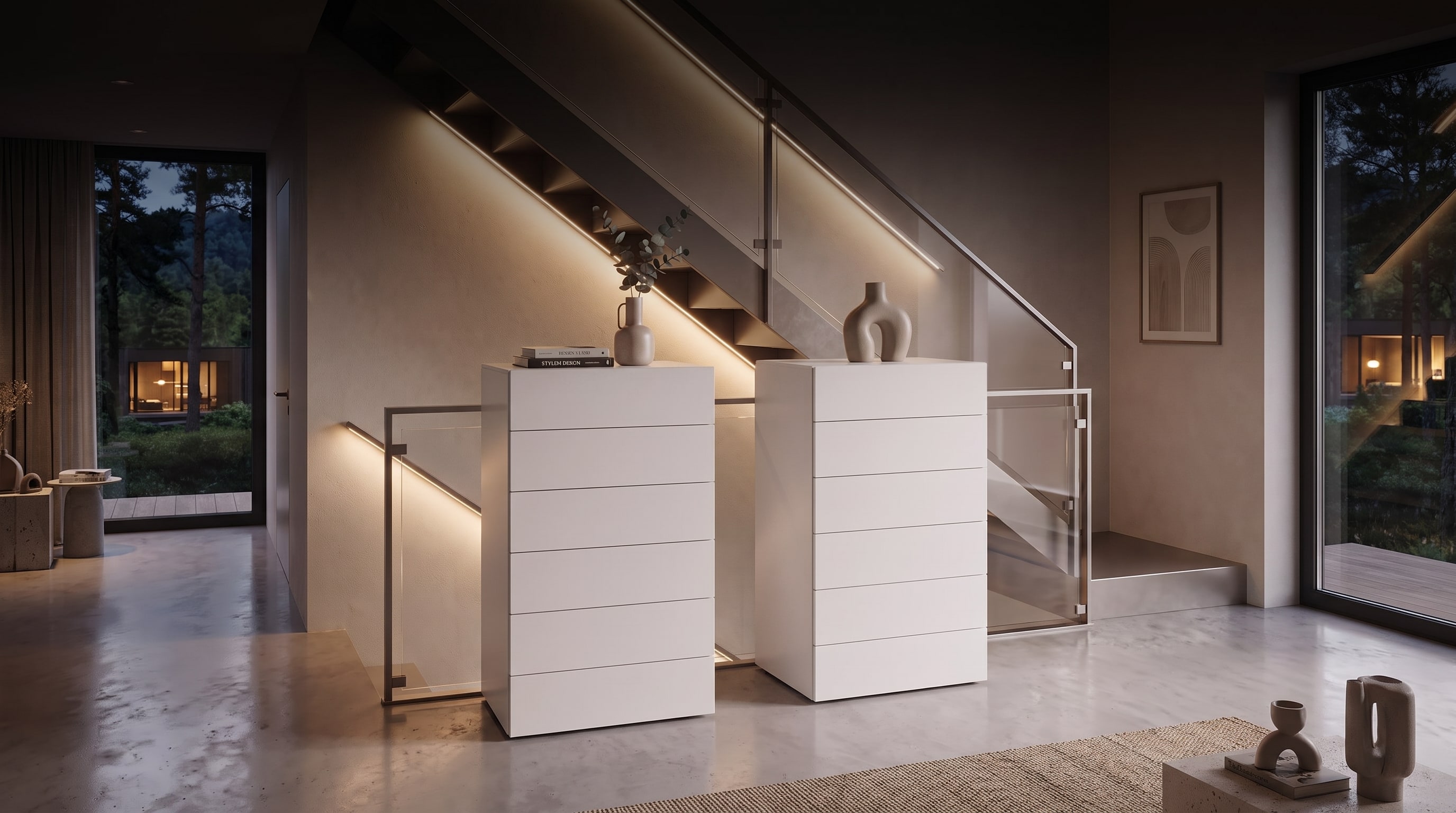 Tall Chest of Drawers: 8 Smart Styling Ideas for Hallways, Bedrooms & StairwellsDiscover how a modern tall chest of drawers transforms narrow rooms and unused corners into stylish storage wonders.
 - Luxury Custom Wardrobe: Uncover Your Hidden Beauty Niche
 Luxury Custom Wardrobe: Uncover Your Hidden Beauty NicheA tidy bedroom radiates calm – but where do perfume, jewelry, and mirrors go? The solution lies in an intelligently planned wardrobe niche.


Indirect Lighting: The Secret Trick for a Luxurious Home – Here's How to Do It Right!
⏳ Reading time: approx. 2 minutes
The Right Lighting as a Feel-Good Factor
We are experts in interior design – and know that light is one of the most important factors for a stylish and homely atmosphere.
Our experience shows: many people underestimate how strongly lighting influences well-being. An incorrectly lit room can appear cold, uncomfortable, or even stressful – with negative consequences for relaxation, health, and social surroundings.
Some of the most common problems caused by poor lighting:
- Unpleasant lighting conditions: Direct, overly bright or too dark light creates an unpleasant atmosphere and can significantly reduce living comfort.
- Increased eye strain and fatigue: Incorrectly placed light sources or a poor light-colour ratio lead to rapid fatigue and can impair vision in the long term.
- Disharmonious room perception: Rooms appear smaller, untidy, or restless if light sources are not positioned correctly.
- Lack of aesthetics and living quality: Guests and residents perceive poorly lit rooms as uncomfortable or of low quality.
The Solution: Indirect Lighting Makes the Difference
Many believe that perfect home lighting is complicated or expensive. But the opposite is true: with the right indirect lighting, the ambience of a room can be drastically improved without major renovations.
Indirect lighting gently distributes light throughout the room, ensures even illumination, and creates a luxurious, homely atmosphere. In this article, you will learn:
- How to use indirect lighting effectively.
- Which solutions are suitable for different rooms.
- Why high-quality light sources make an enormous difference.
- Concrete implementation tips for more cosiness.
Indirect Lighting – The Key to a Feel-Good Atmosphere
Nature shows us the way: everything we see is a reflection of sunlight.
Direct light is rare – instead, the interplay of reflections and diffuse light sources ensures even, pleasant illumination.
Indirect lighting mimics this natural principle and creates harmonious lighting conditions that our eyes perceive as particularly pleasant.
Why does indirect light feel so pleasant?
📌 Light influences our well-being more than we think!
- Natural light as a model: Indirect light behaves similarly to sunlight, which disperses through reflections in nature.
- Less glare: Since the light source itself is not visible, there are no disturbing reflections or unpleasant light cones.
- Room perception: Rooms appear larger and more harmonious because light flows gently into the room instead of creating harsh shadows.
- Targeted accentuation: Light guides the eye – artworks, furniture, or architectural details can be specifically highlighted.
- Functional room design: Through correct light distribution, usage-relevant areas are emphasised, while less important zones are bathed in soft light.
(Source: ResearchGate, StudySmarter)
3. Where can indirect lighting be used?
Indirect lighting can be used in many areas of the home, but in this article, we focus on the most important living areas: living room, bedroom, dining room, and hallway. Each of these rooms benefits from targeted lighting design that improves both aesthetics and functionality.
Indirect Lighting in the Living Room
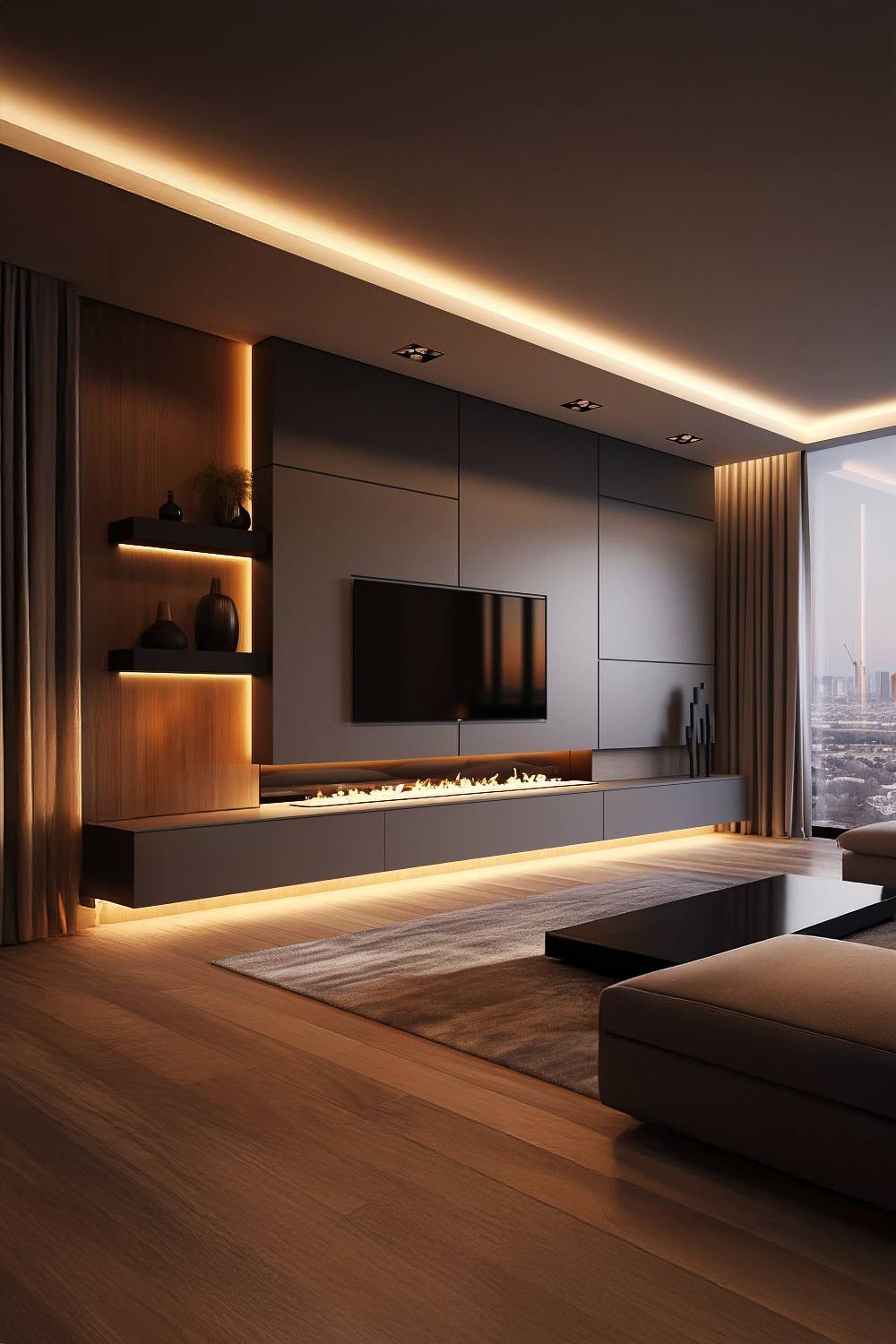
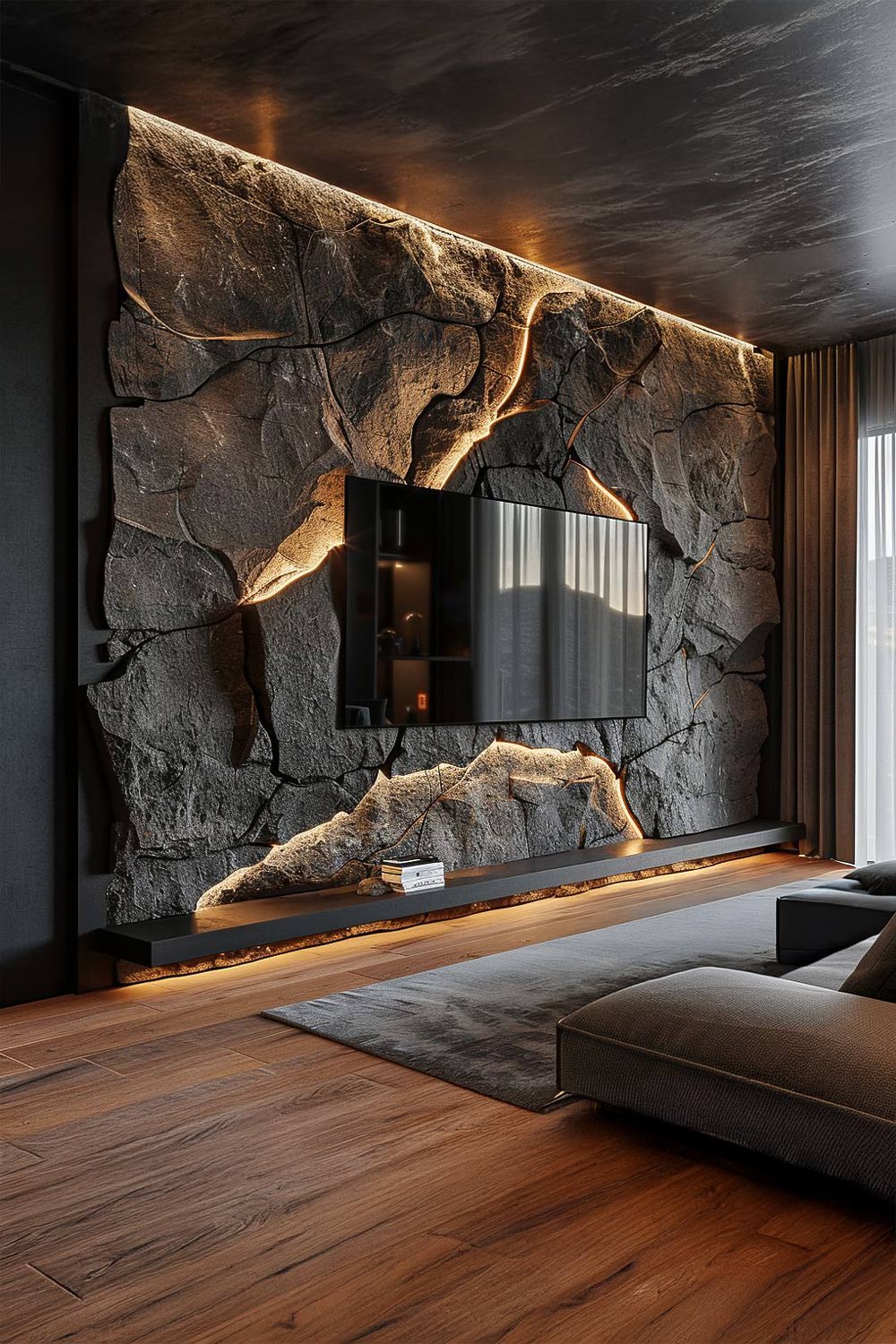
Whether indirect lighting on the ceiling, wall, or behind the TV – the living room offers numerous possibilities for harmonious lighting design.
- Feel-good atmosphere: Light coves or LED strips on the ceiling create a soft ambient light.
- Indirect lighting behind the TV:
- Light behind the TV reduces eye strain and creates a cosy atmosphere. Light behind the TV reduces eye strain and ensures a pleasant viewing experience.
- Indirect lighting for materials:
- Wood, marble, or metal can be perfectly showcased by targeted light on shelves, cornices, or furniture. Shelves, sideboards, or wall panels are visually highlighted by targeted lighting.
Indirect Lighting in the Bedroom
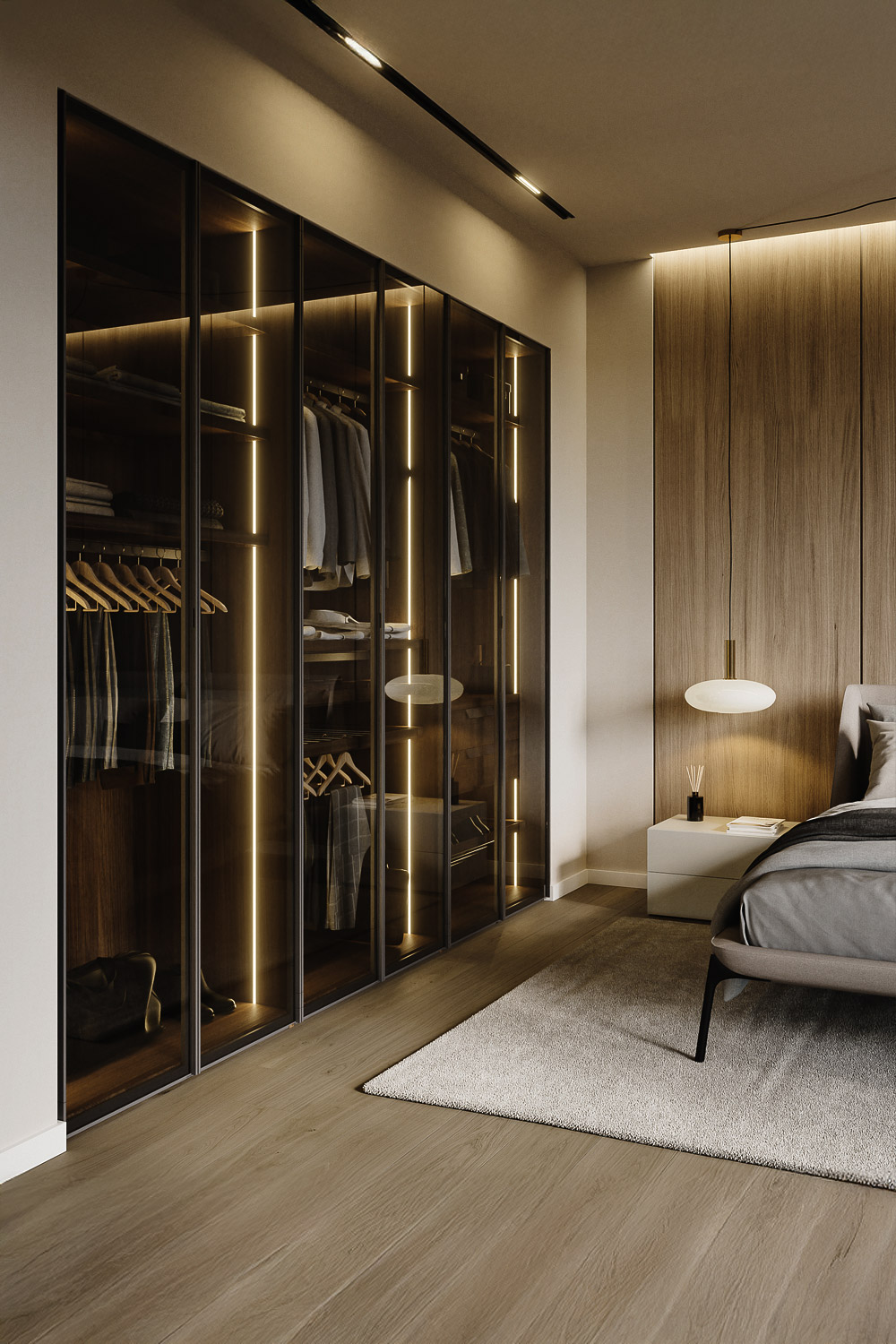
In the bedroom, thoughtful lighting design creates a calming atmosphere. Indirect lighting on the ceiling, behind the headboard, or on walls is particularly popular for a soft lighting mood.
- Relaxing light: Soft LED strips behind the headboard create a calming atmosphere.
- Dimmable lighting: Perfect for different moods – from activating light in the morning to soft light in the evening.
- Light as a design element: Recessed light strips in walls or cabinets emphasise the modern design.
Indirect Lighting in the Dining Room
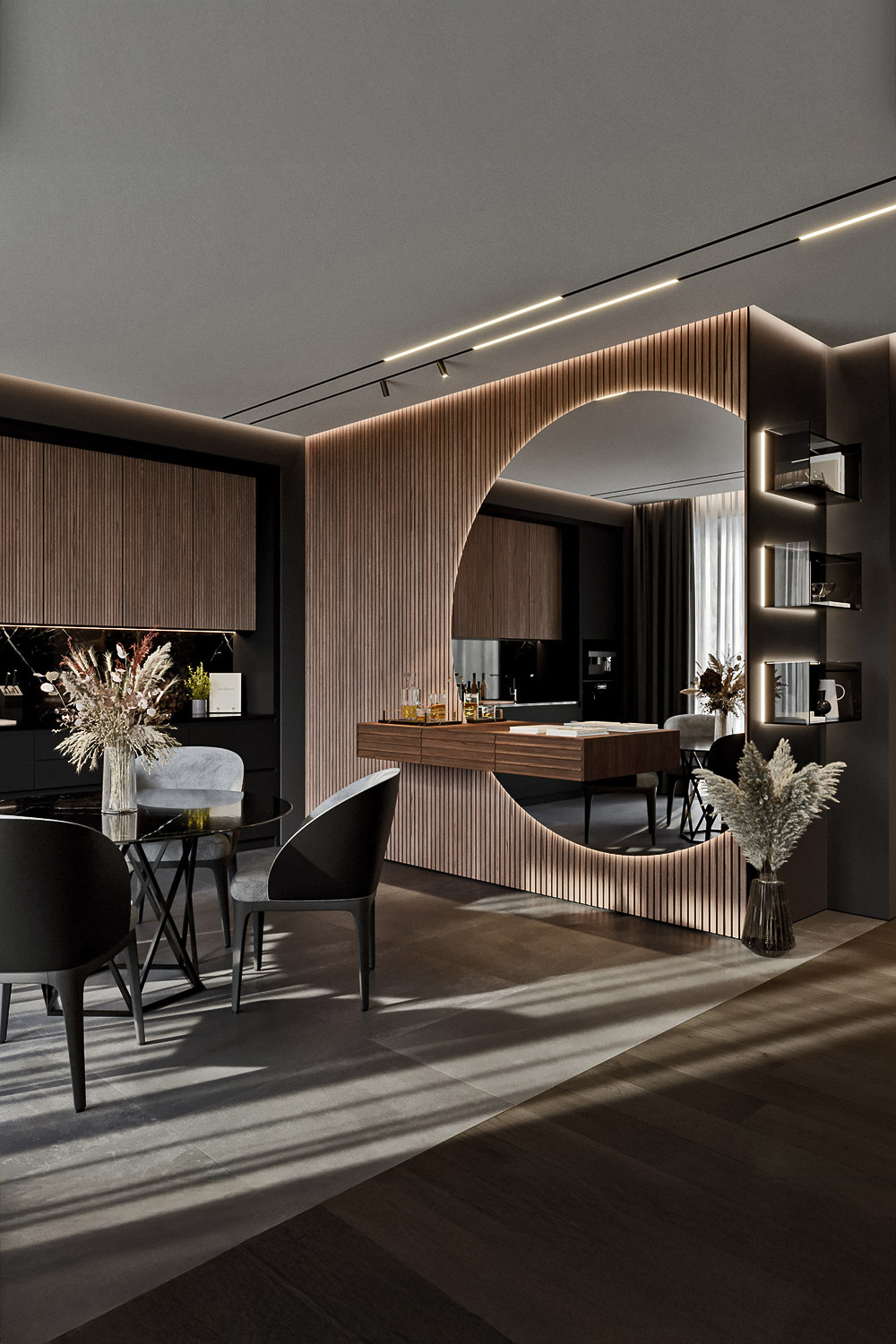
Indirect light sources in the dining room, on ceilings, or in alcoves create an inviting atmosphere. Additionally, dimmable light or indirect lighting with colour change can adapt the ambience for various occasions.
- Harmonious light staging: Indirect light on ceilings or walls complements the central pendant light design.
- Emphasis on materials: Wooden or marble tables are highlighted by targeted lighting.
- Flexible light design: Dimmable, indirect light creates a cosy atmosphere for social evenings.
Indirect Lighting in the Hallway
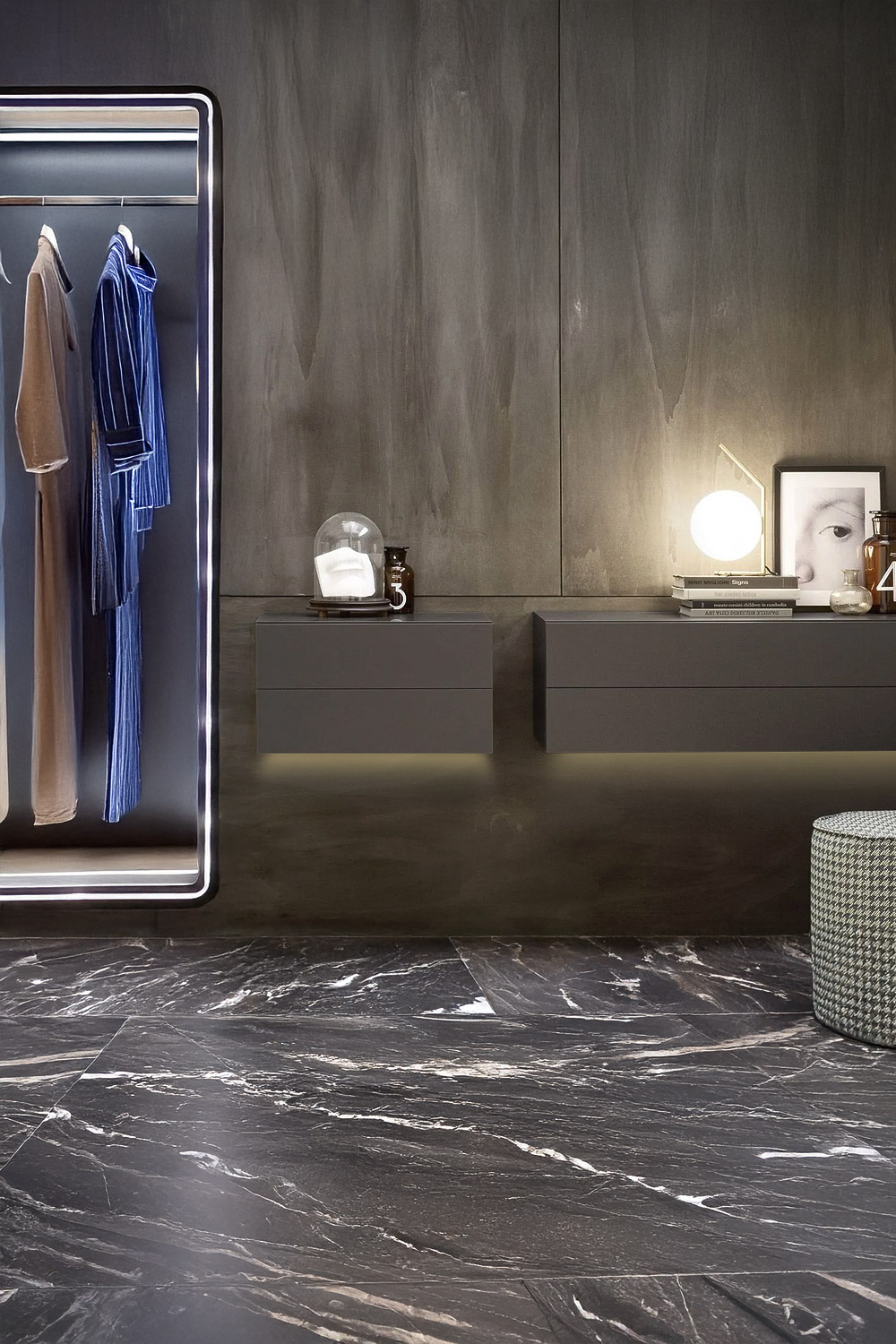
The hallway particularly benefits from indirect lighting on mirrors, in alcoves, or along the walls. Indirect lighting for stairs or cornices provides an elegant look and increased safety.
- Welcoming light: A soft ambient lighting creates an inviting atmosphere.
- Safety aspect: Indirect stair lighting or light in wall alcoves provides better orientation.
- Aesthetics: Mirrors with backlit frames make the hallway appear larger and more open.
4. Conclusion – Indirect Lighting as a Game Changer for Living Spaces
Indirect lighting is the key to harmonious, stylish living space design. It avoids harsh shadows, creates a soft lighting ambience, and sets targeted accents. Those who opt for high-quality solutions benefit from durable, natural light sources that enhance the living space and improve the feel-good atmosphere.
Take the first step towards a stylishly lit home – with the right indirect lighting, every room becomes a place of well-being!

Mira Celini
Interior Designer at LivareaAs an interior designer at Livarea – since 2012 one of Germany's leading online shops for designer furniture – I help customers create their dream homes. My tips come straight from practice: honest, inspiring, and always with an eye for the extraordinary.
→ View all Trendblog articles